Scientist of the Day - Thomas Keefer

The boiler building and the larger pump-house building of the Hamilton Waterworks, designed by Thomas Keefer, 1857-59, Hamilton, Ontario (Wikimedia commons)
Thomas Coltrin Keefer, a Canadian civil engineer, died Jan. 7, 1915, at the age of 93. He was raised in northern Ontario, what they called back then Upper Canada, and he learned to be an engineer working on the Erie Canal, and for various Canadian railroads. But he made his mark with a water pumping station in the city of Hamilton, at the western end of Lake Ontario.

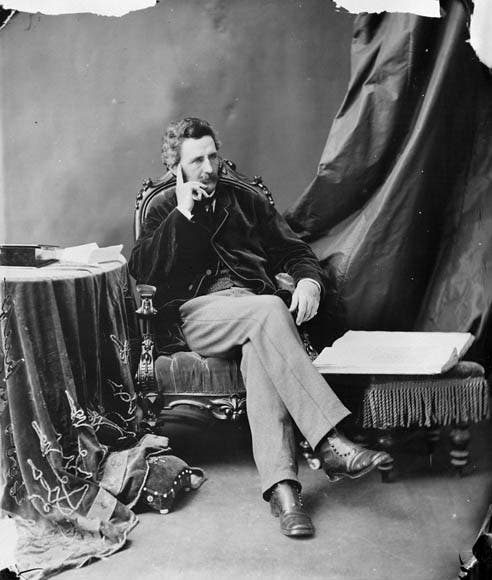
Portrait of Thomas Coltrin Keefer, photograph, unknown date, Library and Archives Canada (biographi.ca)
When we look back at historic civil engineering projects, we tend to focus on bridges, canals, railroads, tunnels, and lighthouses, and we take water supply for granted, making an exception only for the ancient Romans. But growing communities need clean water for drinking, and pressurized water for fighting fires, and it took resources and ingenuity to meet that demand. When Hamilton, Ontario, began to solicit bids for a pumping station in the mid-1850s, they originally hired Keefer to review those bids, but something convinced the city fathers to ultimately hand the design task over to Keefer.

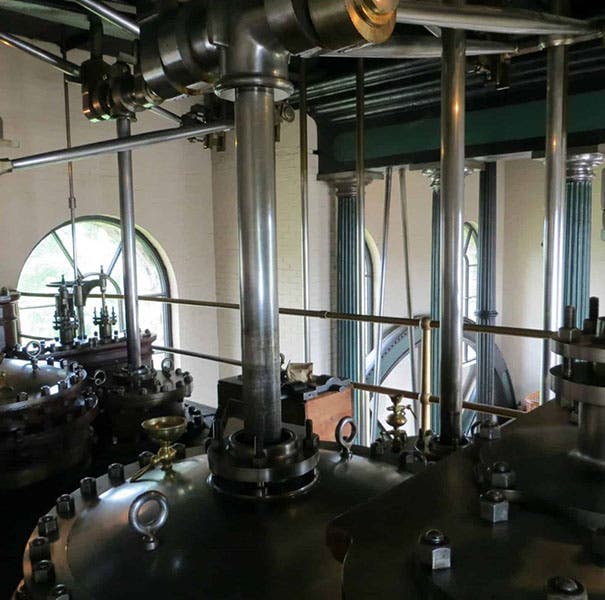
One of the Woolf-style compound steam engines that powered the pumps, Hamilton Waterworks, Ontario, photo by Lisa, Gone with the Family blog (gonewiththefamily.com)
Keefer opted for two mammoth Arthur Woolf-style high-pressure compound beam engines (see our post on Woolf), only he had them built by John Gartshore in nearby Dundas. The pumps drew water from Lake Ontario and pumped it up to a reservoir above the city, whence it was distributed by gravity through a network of pipes.

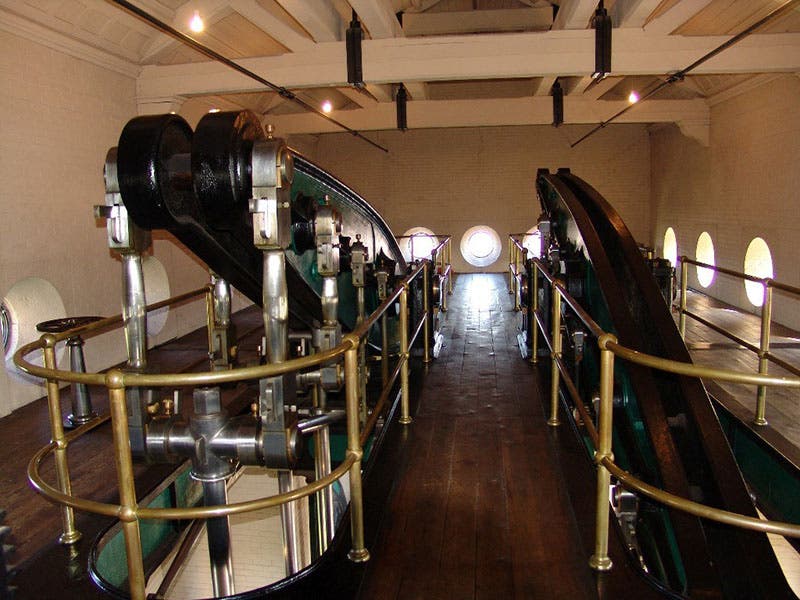
The two walking beams that connect the steam engines to the pumps, top floor of the pump-house, Hamilton Waterworks, Ontario (hamiltonbeachcommunity.com

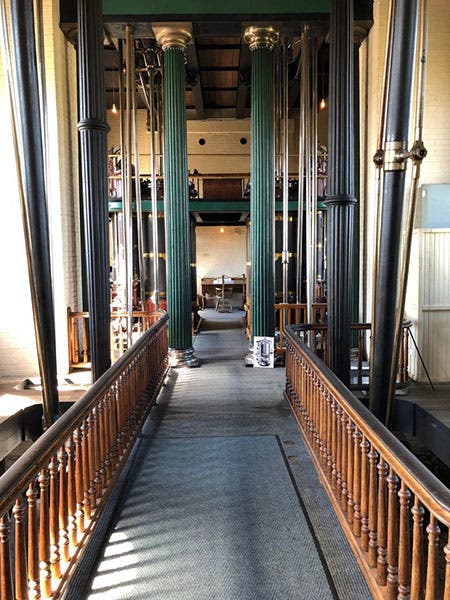
One of the balconies in the pump house of the Hamilton Waterworks, showing the neoclassical balusters designed by Thomas Keefer, photo by Kevin, Day Trip Hour (daytripinanhour.com)
To house the gigantic steam engines and the boiler, Keefer designed the most beautiful set of buildings that ever encased a waterworks. With handsome stone structures to protect the steam engines and their walking beams, and a 150-foot-tall brick exhaust stack that sits on a base of locally quarried stone, the Hamilton Waterworks is not only a civic landmark, but a National Historic Site of Canada, and it is not surprising that it has been preserved in its entirety. It is one of the few places on this continent where one can see two Woolf compound engines with beams, one of which still operates, although it is now turned by an electric motor.

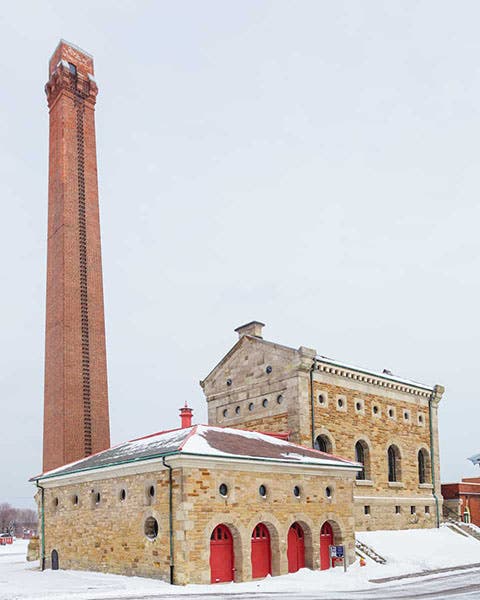
The Hamilton Waterworks in winter, with a better view of the 150-foot-tall brick smokestack (attractionsontario.ca)
The Hamilton Waterworks now houses a Museum of Steam and Technology, which unfortunately has only a marginal web presence. However, the many photos on Trip Advisor and the like suggest that visitors to the historic site are impressed and enthusiastic about what they see. Bu I cannot tell if they learn anything about Thomas Keefer, the man who built the Waterworks.
William B. Ashworth, Jr., Consultant for the History of Science, Linda Hall Library and Associate Professor emeritus, Department of History, University of Missouri-Kansas City. Comments or corrections are welcome; please direct to ashworthw@umkc.edu.