Scientist of the Day - Gilbert White

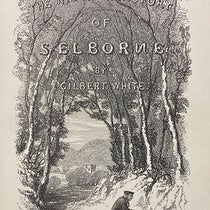
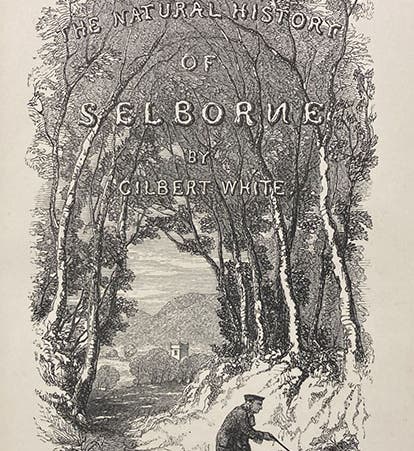
Wood-engraved title page, with a portrait of the author, The Natural History and Antiquities of Selborne, by Gilbert White, edited by William Jardine, 1853 (Linda Hall Library)
Gilbert White, an English country vicar and amateur naturalist, died on June 26, 1793, at the age of 72. White was a lifelong resident of the village of Selborne, in Hampshire, about 55 miles southwest of London. He attended Oriel College, Oxford, but then settled back into the modest family house in Selborne and paid lifelong attention to the goings-on of the birds and small mammals that passed through or took up residence in his garden or the woods and fields nearby. Having observed, for example, the feeding behavior of a hedgehog, which, with its long upper jaw, could eat the root out from under a plantain without disturbing the leaves, he passed observations of natural behavior on to two friends in the form of letters. In 1789, he issued his side of the correspondence in a book, The Natural History and Antiquities of Selborne, which became an instant best-seller, and has remained so for almost two-and-a-half centuries. We own the first edition, and I wrote about it 9 years ago, in a post that I am still quite happy with, and which you can read here.

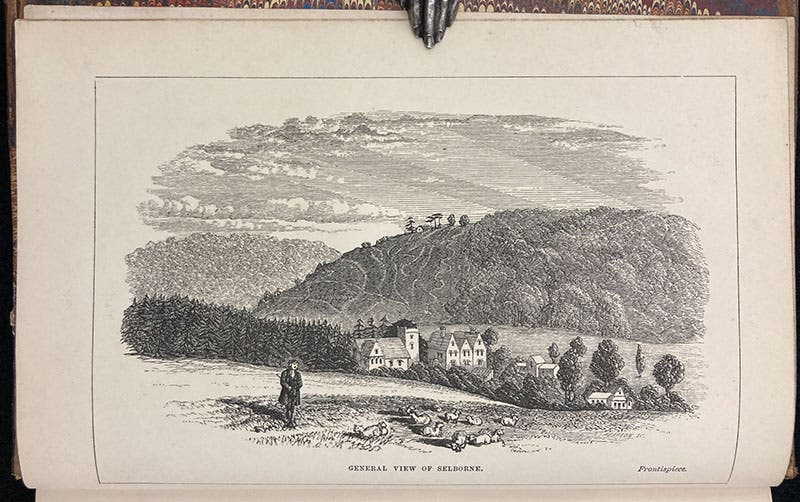
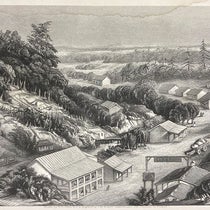
A view of Selborne, wood-engraved frontispiece, The Natural History and Antiquities of Selborne, by Gilbert White, edited by William Jardine, 1853 (Linda Hall Library)
We own some 20 later editions of White's book, and today I would like to discuss why libraries collect editions other than the first. White's first edition of 1789 is quarto-sized, with a handsome frontispiece showing Selborne, but there are few other illustrations, just several added engravings of birds. Most of the animals and birds he so charmingly discussed, such as the hedgehog, or chimney swift, or the globular nest of a field mouse, we're not depicted. There were also the usual number of mistakes – misdated events, misnamed species. Since the first edition sold out quickly, the book needed to be reprinted, and because Gilbert White died in 1793, someone else had to do this.

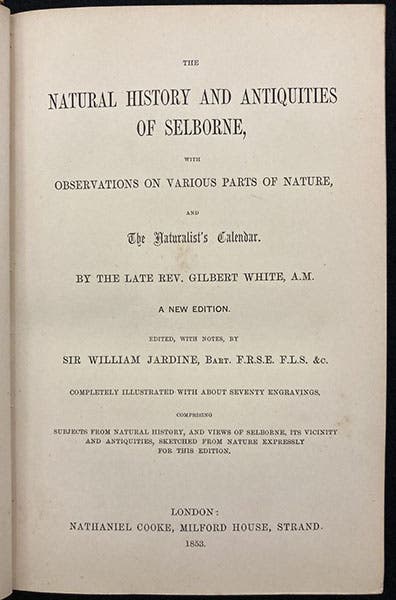
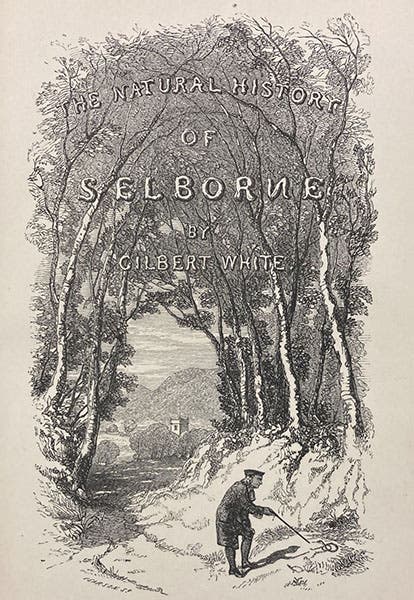
Type-set title page, The Natural History and Antiquities of Selborne, by Gilbert White, edited by William Jardine, 1853 (Linda Hall Library)

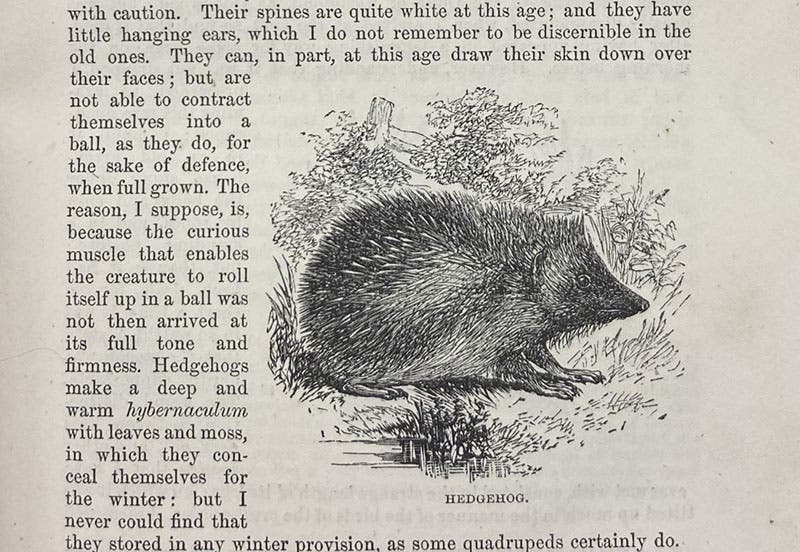
Hedgehog, wood engraving, The Natural History and Antiquities of Selborne, by Gilbert White, edited by William Jardine, 1853 (Linda Hall Library)
Correcting the work was first taken up by local friends and fellow vicars. Readers also wanted to know more about White, and Selborne, and his two correspondents, Daines Barrington and Thomas Pennant. They wanted to know where White learned this or that fact, and what a curlew looked like, and why contemporaries believed that swallows hibernated under water. White’s first editors did not feel comfortable overly annotating White’s book, but plenty of later naturalists did. One of those was William Jardine, an enthusiastic observer of birds, who, in the 1830s and 40s, edited a forty-volume Naturalist's Library, with volumes on Parrots, or Hummingbirds, or Pigeons. In the 1830s, he had consulted on several editions of the Natural History of Selborne, but in the 1850s, he was persuaded to issue his own edition, which was published in 1853. We have two copies in our collections. Jardine added small wood engravings of every animal and bird White discussed (he had quite a stock to choose from, drawing on his Naturalist's Library). He also commissioned wood engravings that depicted Selborne, and a street-side view of the Wakes (White's house), and a view of the back garden. All of our images today were taken from the 1853 edition.

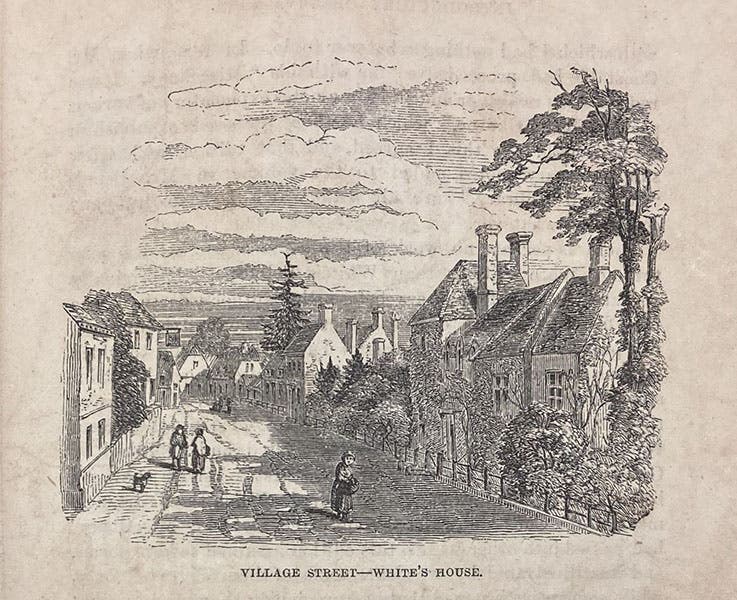
Street-side front of Gilbert White’s house in Selborne, wood engraving, The Natural History and Antiquities of Selborne, by Gilbert White, edited by William Jardine, p. v, 1853 (Linda Hall Library

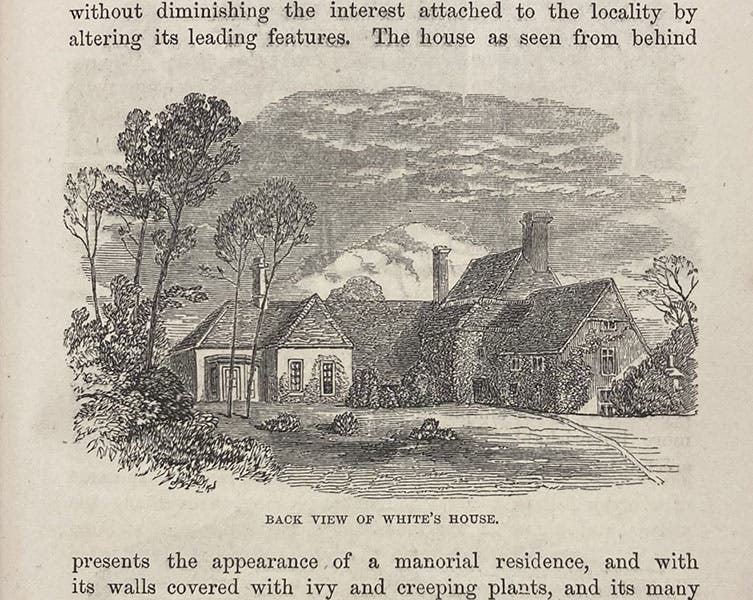
Gardens behind Gilbert White’s house in Selborne, wood engraving, The Natural History and Antiquities of Selborne, by Gilbert White, edited by William Jardine, p. xiii, 1853 (Linda Hall Library)
The 1853 edition is notable for another reason – it was given to us by a generous donor, Jeffrey Weidman, former librarian (now retired) at the Nelson-Atkins Museum of Art in Kansas City. Mr. Weidman has been a frequent benefactor of both libraries, and some years back, he gave us a dozen 19th- and 20th-century editions of the Natural History of Selborne, including Jardine's edition of 1853. We were delighted to accept them, and pleased to showcase one of them today. If you collect rare books, and would like to keep your collection together, please consider donating them to a library that will continue to preserve them.

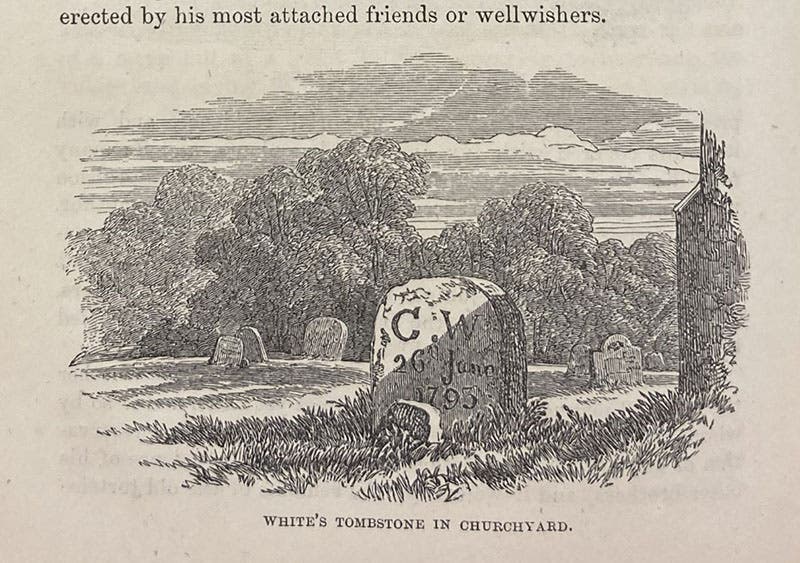
Gilbert White’s tombsone, Selborne chuchyard, wood engraving, The Natural History and Antiquities of Selborne, by Gilbert White, edited by William Jardine, p. xiv, 1853 (Linda Hall Library)
To acknowledge Mr. Weidman's many book donations, our Librarian for Rare books, Bruce Bradley, designed a special Weidman bookplate, drawing on Jardine's wood-engraved hedgehog that appeared in the book being highlighted today (last image). At the time, our Library's mascot was the hedgehog, so the bookplate provided a doubly-effective image.

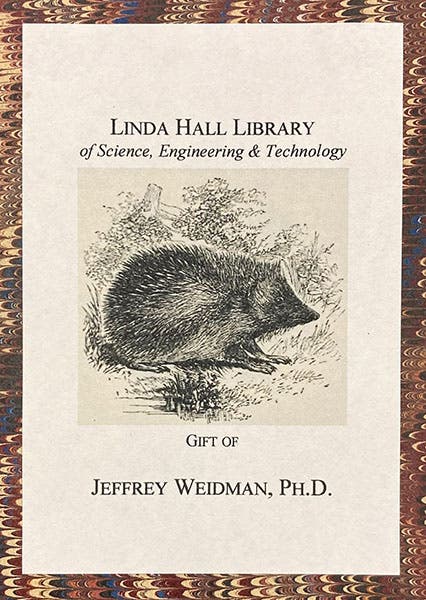
Book plate acknowledging gift of Jeffrey Weidman, designed by Bruce Bradley, The Natural History and Antiquities of Selborne, by Gilbert White, edited by William Jardine, inside front cover, 1853 (Linda Hall Library)
For another view of White's house, see our post on Thomas Bell, an English naturalist who bought White's house in the 1840's and lived there for decades, and later published his own edition of the Natural History of Selborne (1877), which we also have in our collections.
William B. Ashworth, Jr., Consultant for the History of Science, Linda Hall Library and Associate Professor emeritus, Department of History, University of Missouri-Kansas City. Comments or corrections are welcome; please direct to ashworthw@umkc.edu.